




















2026 Proton Saga review - all the good & bad in full detail


Sell your car to Carro, get paid in 24 hours

Latest Stories

  • Amendments to Road Transport Act to be tabled next week – 11 scopes, 42 provisions, here’s what to expect

    Amendments to Road Transport Act to be tabled next week – 11 scopes, 42 provisions, here’s what to expect

    Amendments to the Road Transport Act 1987 (Act 333) are set to be tabled in parliament next Monday, and they will be wide-ranging, containing reforms and changes in 11 scopes, covering 42 provisions. These were briefly outlined by the ministry of transport (MoT) at a special media briefing yesterday, with transport minister Anthony Loke saying that these changes were due.

    “As all matters regarding road transport are under Act 333, it is a very important piece of legislation, and there are amendments that we make periodically. The last was in 2020, regarding increasing the punishment for drink-driving, but this time we have amendments that contain more changes and are more comprehensive,” he said.

    He said the amendments have gone through a careful process, including discussions in the parliament select committee involving members from both the government and the opposition, demonstrating cross-party support. “The first amendment will be tabled in parliament next Monday (first reading) and is expected to be passed as early as Tuesday (second reading), demonstrating the government’s urgency and commitment,” he said..

    Amendments to Road Transport Act to be tabled next week – 11 scopes, 42 provisions, here’s what to expect

    While the primary aim of many of these changes are scoped at improving road safety through new legal provisions, allowing authorities to take more effective action against those who endanger other road users, some of the amendments are targeted at improving the service system and simplify people’s affairs by modernising services and enforcement through digitalisation. Loke said amendments were necessary on that front as the growing scope of digitalisation meant the law also had to evolve accordingly.

    The amendments cover four broad categories, these being digitalisation of services and enforcement; an increase in fine and compound rates: the introduction of new provisions and the strengthening and harmonising of existing provisions. The 11 areas covered under the amendments are:

    Digitalisation of JPJ services and enforcement

    Amendments to Road Transport Act to be tabled next week – 11 scopes, 42 provisions, here’s what to expect

    Although myJPJ is currently being used by 14 million people, many of the digital processes are not yet supported by a solid legal basis. As such, the amendment introduces provisions for the legal use of digital licenses (e-license) and motor vehicle licenses (e-LKM) in the myJPJ application, essentially providing recognition of digital documents as valid according to the law.

    As for enforcement, automatic number plate recognition (ANPR) is set to play a key role in digitalising this – road transport department (JPJ) patrol vehicles will be equipped with cameras that can automatically identify number plates and check the existence of road tax/insurance and also uncover any stolen vehicles.

    When implemented, JPJ patrol vehicles will be able to detect problematic vehicles without having to utilise traditional roadblocks. This will reduce direct interaction between enforcers and drivers, reducing the risk of integrity and corruption allegations.

    Harmonisation of road tax rates and declaration of region for use

    Amendments to Road Transport Act to be tabled next week – 11 scopes, 42 provisions, here’s what to expect

    Currently, road tax (LKM) rates differ by region (Peninsular and Sabah, Sarawak and Labuan). Problems arise when vehicles are registered in a low-fee region (such as Labuan) but are used in Peninsular Malaysia. This amendment will require vehicle owners to declare the primary region of use when registering or renewing their road tax.

    The road tax amount will then be calculated based on the declared location, closing the loophole in which cars that were registered in either duty-free states like Langkawi or Labuan, or in Sabah or Sarawak, get exacted a lower road tax when used in Peninsular Malaysia.

    Increase in the minimum fine rate

    Amendments to Road Transport Act to be tabled next week – 11 scopes, 42 provisions, here’s what to expect

    The current maximum compound rate is RM300, which authorities consider to be insufficient as a deterrent, with many drivers more willing to pay a fine than comply with the law. Therefore, the government is looking to increase the maximum compound rate for certain offences, especially those that endanger safety. Offences that will be involved in the fine increase include driving without road tax (LKM), driving without a valid driving licence (CDL), driving above the speed limit or dangerously, and failure to adhere to traffic lights/road signs.

    “However, the implementation of this increase will not be implemented immediately. It will be given a period of two years for public preparation and system adaptation. This gives room for public education and preparation by the authorities,” Loke explained.

    The introduction of a new Section 42A to deal with illegal racing

    Amendments to Road Transport Act to be tabled next week – 11 scopes, 42 provisions, here’s what to expect

    As indicated previously, the government is looking to clamp down on the mat rempit menace with the introduction of tougher laws. This will be accomplished with a new Section 42A, which has specific rules against illegal racing and speeding. Previously, action could only be taken under the offence of dangerous driving, which required proof of an accident or actual danger.

    This made it difficult for enforcement to act if there was no accident. With Section 42A, the act of racing or speeding itself is now considered an offence, even if there is no accident (for example, two or more vehicles speeding competitively on a public road).

    Electronic accident reporting (e-Polis Reporting)

    Amendments to Road Transport Act to be tabled next week – 11 scopes, 42 provisions, here’s what to expect

    The amendment to Section 52 allows accident reporting to be done electronically, not just physically at the police station. This is a collaboration between the MoT, Bank Negara Malaysia (BNM), and the General Insurance Association of Malaysia (PIAM) to make it easier for accident victims to make insurance claims. Minor accidents involving single vehicles without injuries or third parties can be reported via e-Polis Reporting.

    Identical to the PDRM e-Reporting pilot trial that was introduced last September, this reduces the burden on the police, saves time, and helps process insurance claims faster. It also addresses the problem where drivers have difficulty reporting accidents because they are far from their homes. However, accidents involving injuries, deaths or third parties will still require a physical report as usual.

    Expanding the transport minister’s regulatory powers

    The amendment clarifies and expands the regulatory power of the minister of transport over workshops, modifications, technical safety standards and EV/new-tech components. This will include the ability to regulate the registration and operation of workshops, factories and vehicle repair centres; setting technical standards for vehicle safety; regulating driver training/shifts and setting related fees.

    The extended scope will also cover regulating new vehicle models, components, and safety technologies (for example, electrical systems on vehicles). This is important to address issues, for example illegal modifications that cause electric shocks on buses, because previously there was no clear authority to take action against workshops or manufacturers.

    Enhanced cross-border movement control

    Amendments to Road Transport Act to be tabled next week – 11 scopes, 42 provisions, here’s what to expect

    The amendment tightens control of vehicles entering or leaving Malaysia, with the purpose being to encourage vehicle owners to settle summonses before travelling or crossing the border. Essentially, foreign vehicles may be prohibited from entering if they do not have a valid permit (including VEP) or have outstanding summonses, while Malaysian vehicles may be prevented from leaving the country if they have pending traffic summonses.

    Vehicle towing and impounding

    Amendments to Road Transport Act to be tabled next week – 11 scopes, 42 provisions, here’s what to expect

    The amendment will provide local authorities (PBT) with clearer scope to remove vehicles that are obstructing traffic or violating parking regulations, and also detain these vehicles until removal and detention fees are paid, with the risk of removal being on the vehicle owner. The changes are aimed at addressing the problem of random parking causing congestion in urban areas.

    Curbing “tonto” activities

    The amendment introduces new provisions to make “tonto” activity – in which individuals or groups help lorry drivers evade enforcement by disrupting JPJ field operations – a criminal offence, with authorities being able to take action and mete out strict penalties in the form of fines and/or imprisonment.

    Management of micromobility vehicles

    With the use of electric scooters and other micromobility devices increasing, the amendment looks to introduce clearer definitions and rules regarding e-scooters/e-bikes, with the intention of providing a framework regarding their use. These include a minimum age to use, speed limits, where these devices can be ridden as well as the need for safety equipment (helmet, lighting, reflectors etc)

    As there is presently no clear procedure for managing impounded or abandoned vehicles, the amendment will also introduce one, where micromobility vehicles used contrary to regulations may be impounded. The owner will be given a reasonable period to reclaim them. If not reclaimed, the vehicle can be legally destroyed with the permission of the court. This will help authorities manage and overcome storage and safety issues in public areas.

    Addressing document forgery and vehicle cloning

    Amendments to Road Transport Act to be tabled next week – 11 scopes, 42 provisions, here’s what to expect

    The amendment increases the punishment under Section 19 for the offence of submitting false documents or false vehicle records, with higher fines and prison terms for those convicted of for these offences. It aims to tackle vehicle cloning syndicates and address the issue of document forgery and stolen vehicles, crimes that were previously not punished commensurate with the risk.

     
  • Denza Z9GT spied in Malaysia – right-hand-drive units transported to showrooms; official launch soon?

    Denza Z9GT spied in Malaysia – right-hand-drive units transported to showrooms; official launch soon?

    A batch of right-hand-drive Denza Z9GT units has been sighted on their way to showrooms aboard a transporter, as photographed by paultan.org reader Derek Chong. The Z9GT was previewed in Malaysia earlier this month, at the Sime Motors MotorExpo.

    The Z9GT was shown in Malaysia already in right-hand-drive form, which should mean that its official launch is imminent. The battery-electric station wagon packs a three-motor powertrain consisting of a 313 PS/430 Nm front motor, and a pair of motors on the rear axle each producing 422 PS and 400 Nm to yield a combined 1,156 PS and 1,210 Nm.

    This setup will propel the Z9GT from 0-100 km/h in 2.7 seconds, and on to a top speed of 269 km/h. Energy is stored in a second-generation Blade LFP battery that holds up to 122.49 kWh, for a WLTP-rated range of 600 km.

    In its latest 2026 form, the Z9GT is able to support BYD’s Flash Charging technology to take up to 1,500 kW through a specialised DC charger. This enables the Z9GT to be recharged from 10-70% in just five minutes, or form 10-97% in nine minutes.

    This level of charging requires the use of the Flash Charging stations, which are on a self-operated network; BYD has deployed 5,000 of these stations in China, with 6,000 of them to be deployed globally in the next 12 months.

    In addition to the battery-electric version, the Denza Z9GT is also produced in Dual Mode (DM) plug-in hybrid form, which employs a 173 PS/320 Nm 2.0 litre turbo four-cylinder petrol engine and three electric motors of lower rating, for a combined 776 PS and 1,035 Nm. This setup enables the 0-100 km/h run in 3.6 seconds, while pure EV range is 203 km from a 63.82 kWh battery and a combined range of 805 km.

    The 2026 update as shown at the preview also revealed a new three-spoke flat-bottomed steering wheel, a column-mounted transmission selector, and a reconfigured centre console with repositioned physical controls and additional storage. Displays continue to be a 17.3-inch infotainment touchscreen, a 50-inch augmented reality head-up display and twin 13.2-inch driver and passenger displays.

    Also found in preview guise were leather upholstery and light-smoked wood decor, plus powered, heated, ventilated and massaging front seats with active side bolsters, along with rear seats that incorporate extended leg rests.

    Further conveniences include front and rear built-in refrigerators, panoramic glass roof, four-zone air-conditioning, a trio of 50-watt Qi wireless device chargers (two in front, one at the rear), and a 20-speaker, 1,150-watt Devialet sound system with Dolby Atmos surround sound. For luggage, the rear compartment takes 495 litres, while the front holds up to 53 litres.

    There’s yet to be official indicative pricing for the Denza Z9GT, though with prices in Europe starting from 117,500 euros, this equates to around RM554k. No small sum, then, though this model is generously equipped. What do you think of the Denza Z9GT?

    GALLERY: 2026 Denza Z9GT previewed in Malaysia

     
  • 2026 Honda Vario 125 Malaysia new design, RM7,268

    2026 Honda Vario 125 Malaysia new design, RM7,268

    Getting a makeover is the 2026 Honda Vario 125, priced at RM7,268 in Malaysia. Following the launch of the Vario 125 Street (RM7,468) in April, the Vario 125 completes the Vario range in the local scooter market.

    Pricing for the Vario 125 is unchanged from 2025, and a two-year or 20,000 km warranty is offered against manufacturing defects. Stocks of the Vario 125 will be available in all Honda Impian X and authorised Boon Siew Honda dealerships nationwide beginning 22 June 2026.

    New colour options are Green, Magenta, and Matte Black, complemented by new graphic accents on the bodywork. Bodywork is new for 2026, with a sharper front fascia and a more dynamic stance.

    2026 Honda Vario 125 Malaysia new design, RM7,268

    Also new for the Vario 125 is the lighting, with new LED headlamps, as well as LED turn signals and tail light. Additionally, there is now a USB-C charging port inside the front cowl for charging the rider’s electronics, adding to the practicality of the Vario 125.

    No changes otherwise for Vario 125 specifications, powered by an Enhanced Smart Power (eSP) single-cylinder, SOHC liquid-cooled engine with idling start-stop, displacing 124.9 cc. Honda says the Vario 125 is capable of producing 11.5 hp at 8,500 rpm and 11.74 Nm of torque at 5,000 rpm, certified as an Energy Efficient Vehicle (EEV) and has a three-star Malaysia Motorcycle Assessment Program (MyMAP) rating.

    Power goes to the rear wheel via a CVT gearbox and belt drive, while wheel sizing on the Vario 125 is 14-inches, wearing 90/80 tyre in front and 100/80 rubber in the rear. The Vario 125 gets a hydraulic disc in front and mechanical drum brake at the back with Honda’s combined braking system (CBS), and a parking brake is standard equipment.

    2026 Honda Vario 125 Malaysia new design, RM7,268

    Telescopic forks hold up the front end of the Vario 125, while the rear is propped up with a single preload-adjustable shock absorber. Riding conveniences on the Vario 125 include smart key for keyless starting with anti-theft alarm and vehicle answer back, while an 18-litre storage compartment is found under the seat.

    Riding information is displayed LCD instrument panel. The Vario 125 holds 5.5-litres of fuel in the tank with weight listed at 112 kg and seat height is set at 769 mm.

     
  • MG4 Urban for Thailand – badged MG Urban, up to 160 PS, 416 km WLTP range, fr RM67k; Malaysia next?

    MG4 Urban for Thailand – badged MG Urban, up to 160 PS, 416 km WLTP range, fr RM67k; Malaysia next?

    Image courtesy of Autolifethailand

    It’s taken a while for the MG4 Urban to arrive in Southeast Asia, but it’s finally done so – first in Singapore, then in the Philippines and now, Thailand. The electric hatch has been launched in the Land of Smiles, there without the MG4 moniker (so just the MG Urban, then) to differentiate it from the current model.

    The Urban is offered in Standard, Max and Ultra versions, priced at 529,900 baht (RM66,800) for the Standard, 599,900 baht (RM75,600) for the Max and 709,900 baht (RM89,500) for the Ultra. All are single-motor front-wheel drive, with the base model producing 150 PS (110 kW) and 250 Nm of torque, getting it from zero to 100 km/h in 9.6 seconds on its way to a top speed of 160 km/h.

    Equipped with a 42.8 kWh LFP battery, the Standard delivers a WLTP range of 325 km, while the Max and Ultra versions gain a 53.9 kWh pack that allow them to travel up to 416 km. These two also get boosted to 160 PS (118 kW), although this only shaves a tenth a second off their century sprint, which they complete in 9.5 seconds. No mention of a semi-solid-state battery, which appears to be exclusive to China for now.

    MG4 Urban for Thailand – badged MG Urban, up to 160 PS, 416 km WLTP range, fr RM67k; Malaysia next?

    Image courtesy of Autolifethailand

    The MG Urban supports up to 82 kW of DC fast charging for the Standard and 88 kW on the other models, topping them up from 10 to 80% in 28 and 30 minutes respectively. It will also accept up to 6.6 kW of AC charging, which is much lower than the 11 kW max offered in other markets like the UK.

    Continuing the trend set by most modern Chinese EV hatches, the Urban’s middle-of-the-road one-box design differs from the sharp and sporty design of the original MG4, sporting cues lifted from the Cyberster. These include sweptback LED headlights, a split lower air intake and arrow-shaped taillights inspired by the Union Jack. The alloy wheels measure 16 inches for the Standard and 17 inches for the Max and Ultra.

    Inside, the Urban takes after the MG S5 SUV with a clean horizontal dashboard design, a large infotainment touchscreen (12.8 inches for the Standard, 15.6 inches for the Max and Ultra) and physical air con controls (yay!). These items have also been carried over into the MG4.

    MG4 Urban for Thailand – badged MG Urban, up to 160 PS, 416 km WLTP range, fr RM67k; Malaysia next?

    Image courtesy of Autolifethailand

    Other standard equipment includes a seven-inch instrument display, a six-way power-adjustable driver’s seat (the Max and Ultra get ventilated front seats, and the latter gains a powered passenger seat as well), grey faux leather upholstery, auto air con, wireless Apple CarPlay and Android Auto, rear air vents and a 3.3 kW vehicle-to-load (V2L) function. The Max and Ultra also come with a Qi wireless charger, a 360-degree camera and a powered tailgate, while a panoramic glass roof and remote park assist are exclusive to the Ultra.

    Safety-wise, the Urban comes as standard with six airbags and a suite of driver assists that include autonomous emergency braking, adaptive cruise control, blind spot monitoring, rear cross traffic alert with auto brake, rear collision warning, a door opening warning and auto high beam. The Ultra gains lane centring assist for full Level 2 semi-autonomous driving capabilities, as well as a front centre airbag.

    With the Urban already in many ASEAN markets, it will likely be launched in Malaysia eventually, although it wasn’t among the cars currently being previewed at the Kuala Lumpur International Mobility Show (KLIMS). That means it may need to wait until after the flurry of new models already earmarked for our market, which include the new MG ZS and the premium IM6 this year.

    It will also need to be CKD locally assembled to be priced competitively, and the EP Manufacturing (EPMB) plant in Melaka is probably already swamped with production of the MG S5 and the aforementioned ZS.

     
  • JPJ aware of locals renting out vehicles to foreigners without lesen, threatens seizures in Ops PEWA

    JPJ aware of locals renting out vehicles to foreigners without lesen, threatens seizures in Ops PEWA

    JPJ Selangor, in Ops Pemandu Warga Asing (PEWA) that started earlier this year, has detected locals renting out or allowing their vehicles to be driven by foreigners without valid licenses. Deputy director Datuk Ahmad Kamarunzaman Mehat said that the trend came to light when owners came to claim their vehicles after they were seized and the cases brought to court.

    He said that the same thing happened in the latest three-day operation that started last Tuesday in Balakong, Puchong, Petaling Jaya and Persiaran Hamzah Alang in Shah Alam, in cooperation with the state’s immigration department and local councils MBSJ and MBPJ.

    “Vehicle owners and foreign drivers have to pay the fine dished out by the court before the vehicle can be removed from JPJ’s depot. If they fail to pay the fine, the vehicle cannot be claimed,” he told reporters at an Ops PEWA press conference yesterday.

    Ahmad Kamarunzaman revealed that JPJ took action against 304 vehicles, including 125 motorcycles, 90 private vehicles, 74 goods vehicles and 15 public service vehicles.

    JPJ aware of locals renting out vehicles to foreigners without lesen, threatens seizures in Ops PEWA

    Of the 239 foreigners involved, 50 were from Myanmar, followed by Bangladesh (46), Indonesia (44), India (10) and other countries (89). 734 offences were recorded, with ‘no lesen’ cases the highest at 268 cases, followed by no road tax (207) and no insurance (178).

    A total of 95 vehicles were seized, including 61 motorcycles, 23 goods vehicles, nine private vehicles and two public transport vehicles. Ahmad Kamarunzaman said that some of the vehicles used by foreigners were not well maintained, with bald tyres and bad brakes, which endangers other road users.

    The JPJ Selangor man warned vehicle owners, employers and transport companies that under Section 109 of the Road Transport Act 1987, registered owners are responsible for the offences of the driver, including foreigners.

    Under Section 64 of the same act, JPJ can seize a vehicle if a foreign driver does not possess a valid driver’s license. Companies that hire ineligible drivers can face suspension or cancellation of permits under the Land Public Transport Act 2010.

     
  • May 2026 Malaysian vehicle sales down by 15% – MAA

    May 2026 Malaysian vehicle sales down by 15% – MAA

    The Malaysian Automotive Association (MAA) has released vehicle sales data for the month of May 2026, which saw a total of 61,250 units delivered to customers. This represents a decline of 15%, or 10,863 units, from the 72,113 units reported for the month of April.

    According to the association, the reduced total industry volume (TIV) after two consecutive months of growth was primarily due to the long festive holiday period towards the end of April. It expects sales to regain its momentum in the month of June 2026.

    Compared to the same month last year, May 2026’s total is also down by 12%, or 8,357 units, from the 69,607 units recorded for May 2025. Meanwhile, the year-to-date (YTD) tally so far is 315,568 units, which is 1%, or 4,278 units, less than the same period in 2025 that saw 319,846 deliveries.

    Production numbers reflect the sales drop, with 57,849 units coming out of factories in May 2026. This is 13%, or 8,865 units, less than the same month last year (66,354 units). Similarly, the YTD production total is now at 287,477 units, which is 4%, or 13,082 units, less than the 300,559 units reported for the first five months of 2025.

     
  • Xpeng X2 flying car currently on display at KLIMS 2026

    Xpeng X2 flying car currently on display at KLIMS 2026

    This is Xpeng’s flying car prototype that is currently on display at this year’s Kuala Lumpur International Mobility Show (KLIMS). Called the X2, it is dubbed a fifth-generation flying car by Xpeng AeroHT, which is the Chinese company’s aviation and flying car subsidiary that has since been renamed to Aridge.

    The X2 features an enclosed cockpit with a minimalist teardrop-shaped design and carbon-fibre structure. Capable of ferrying two passengers, it is fully electric and adopts an octocopter layout with four arms, each mounting two electric motors and counter-rotating propellers.

    Its four lithium-ion battery packs enable a flight time of around 35 minutes, and the X2 can travel at speeds of up to 130 km/h and cruising altitude between 300 and 500 metres. In 2022, the X2 completed its first public flight in Dubai, with other demonstrations taking place in China since.

    The X2 primarily served as a testbed and a demonstrator for Xpeng’s flight control software, autonomy and electric propulsion technologies, but it was never meant to be sold to customers. However, it did pave the way for upcoming commercial flying vehicles.

    This includes the Land Aircraft Carrier, which sees a two-seat fully electric eVTOL (electric vertical take-off and landing) aircraft tucked into a six-wheeled vehicle. When flying is needed, the aircraft exits from the rear “carrier” and deploys its six arms, each with a propeller and electric motor to take off and fly away.

    Aridge, as it is now known, says the aircraft provides roughly 30 minutes of flight time and can be charged by the carrier, which is a range-extended electric vehicle (REEV) with an 800-volt system and petrol generator. The company is also working on the A868, a high-speed, long-range full tilt-rotor flying car capable of over 500 km and 360 km/h.

    In October 2024, Aridge broke ground on its flying car manufacturing base in Huangpu, Guangzhou, which was completed less than a year later in September 2025. Production of the Land Aircraft Carrier is slated for this year, with deliveries to follow shortly after.

     
  • LRT3 Shah Alam Line to open soon – Rapid KL

    LRT3 Shah Alam Line to open soon – Rapid KL

    Rapid KL has teased the opening of the LRT3 Shah Alam Line, which transport minister Anthony Loke had previously indicated would open by the end of this month.

    This, along with the announcement by the transport minister, is in line with the timeline stated in February, which was when the transport minister said the rail line is expected to commence operations in June.

    Spanning 25 stations along a 37.8 km line, The Shah Alam Line runs from Bandar Utama to Johan Setia with interchanges at Bandar Utama (Kajang MRT) and Glenmarie (Kelana Jaya LRT).

    Launched in 2016, the line was initially designed for 26 stations, though in 2018 this saw one station cancelled and the construction of five stations halted. Budget 2024 saw construction of the five stations reinstated; these were Tropicana (previously Lien Hoe), Temasya, Raja Muda (Sirim), Bukit Raja and Bandar Botanik.

    Originally planned for operations to start on September 30, 2025, the LRT Shah Alam Line rail project was delayed to December 31 last year, and then it was announced in December that operations would not begin in 2025. Delays were attributed to system stability and software issues identified during the testing and commissioning phase.

     
  • Explore AMARON at KLIMS 2026 – get a free battery health check, see the range of products and services

    Explore AMARON at KLIMS 2026 – get a free battery health check, see the range of products and services

    Battery health is crucial to the steady, reliable operation of an automobile, and as battery failure continues to be among the leading causes of vehicle breakdowns, preventive care and precautions are paramount in ensuring worry-free operation, which is where a trusted brand comes into play.

    Enter AMARON, which is at the 2026 Kuala Lumpur International Mobility Show (KLIMS 2026) that is taking place at the Malaysia International Trade and Exhibition Centre (MITEC) this weekend, until June 21, 2026. This event is where you’ll find AMARON on location with its wide range of battery products to suit a variety of motor vehicles.

    Of course, you may be curious about the health of the battery that is presently installed in your vehicle. To this end, AMARON which is at KLIMS 2026 at Hall 1, Level 1, is offering visitors to its booth a complimentary health check throughout the duration of the show; head to the booth to find out more.

    Explore AMARON at KLIMS 2026 – get a free battery health check, see the range of products and services

    The complimentary health check is a quick, no-obligation service that will offer vehicle drivers valuable insight into the condition of their vehicle’s battery – regardless of the brand of battery currently in use. This surely is a practical, worthwhile reason to visit to booth to explore the aftermarket services zone, and engage with the team at AMARON.

    Of course, the AMARON product line is showcased at KLIMS 2026. Visitors to the booth may explore the brand’s extensive portfolio with guidance from the brand’s technical experts, and no matter your vehicles’ application, be it daily commuting, commercial duties, or high-performance driving, the AMARON team will be on hand to identify the product best suited to your needs.

    AMARON batteries are engineered to operate in the rigours of the Malaysian driving environment, being designed for high heat tolerance, superior vibration resistance and to offer a dependable reserve capacity. Factory-charged and ready for installation from the get-go, AMARON batteries offer a convenient, reliable solution for motorists seeking both long-term performance and peace of mind.

    Explore AMARON at KLIMS 2026 – get a free battery health check, see the range of products and services

    This peace of mind can be enjoyed beyond just the point of purchase, as AMARON customers can connect with AMARON Care Centres and authorised service centres throughout Peninsular Malaysia for warranty support, battery assistance and after-sales service.

    As KLIMS 2026 comes to its conclusion this weekend, be sure to head to the AMARON booth at the Malaysia International Trade and Exhibition Centre (MITEC) Hall 1, Level 1, and learn more about all that’s offered by AMARON. Find out more here about AMARON in Malaysia, for batteries that Last Long, Really Long.

     
  • Dongfeng Voyah Dream previewed in Malaysia at KLIMS 2026 – 1.5T PHEV two-motor luxury MPV

    Dongfeng Voyah Dream previewed in Malaysia at KLIMS 2026 – 1.5T PHEV two-motor luxury MPV

    Previewed alongside the MHero II off-roader and the 008 SUV on the third-last day of the Kuala Lumpur International Mobility Show (KLIMS) 2026 is the Voyah Dream MPV. If you don’t like any of the following – Vellphard, G9, M8, X9, D9 or 009, your Dream has come true.

    Voyah is to Dongfeng what Wey is to GWM – it’s the luxury sub-brand. In China, the Voyah Dream can be had in PHEV (as shown here at KLIMS) and EV versions.

    The latest PHEV version has 800V architecture, 5C charging, a 62.5-kWh battery (there’s also a 43.2 kWh option with a 225-km CLTC EV-only range), a 350-km CLTC EV-only range and a 1,530-km combined range (Dongfeng Malaysia quotes 1,500 km but does not specify the cycle), while the EV version has a 700-km CLTC range, a 108.7 kWh NMC battery and two electric motors (551 PS total).

    The Dream’s length is a mad 5,315 mm, making it longer than all of its compatriots, including the 5,293 mm-long Xpeng X9. Its 1,980-mm width is about average; wider than the Denza but the Zeekr remains the width king at 2,024 mm.

    In terms of height, the Voyah stands at 1,820 mm (Vellphard twins are tallest at 1,950 mm; Xpeng X9 is lowest at 1,785 mm). Its 3,200-mm wheelbase is unrivalled by all but the Zeekr, which beats it by only 5 mm.

    The 653 PS/915 Nm PHEV version (1.5T + two electric motors) does 0-100 km/h in 5.9 seconds and maxes out at 203 km/h. There’s rear-wheel steering (up to five degrees), a 29-inch augmented-reality head-up display, a 17.3-inch ceiling monitor, a 15.6-inch touch-screen, a 13-litre centre console fridge and air suspension with continuous damping control.

    The KLIMS car has seven seats, but in China there’s also a four-seat version, which we saw at Auto China 2026 in Beijing. That extremely plush guy has a curtained partition between the two rows of seats on which is mounted a huge TV. There are also elaborate footrests that combine with the reclining seats to provide a business class-style lie-flat sleeping area, and all windows save for the front ones are curtained.

    Whether or not we’ll get this four-seat version is probably something we can only Dream about, but the seven-seater is almost a given. The more pertinent question is, will we get the PHEV or the EV? The PHEV’s KLIMS appearance is a strong suggestion. Of all the Chinese luxo-MPVs currently in Malaysia, only the GAC M8 and GWM Wey G9 are PHEVs.

    Dongfeng Voyah Dream seven-seater at KLIMS 2026

    Dongfeng Voyah Dream seven-seater at Auto China 2026 in Beijing

     
  • Dongfeng 008 SUV previewed in Malaysia at KLIMS – high-end 5m-long six-seater EV with 520 km range

    Dongfeng 008 SUV previewed in Malaysia at KLIMS – high-end 5m-long six-seater EV with 520 km range

    Better late than never, they say, and that’s certainly true for Dongfeng at Kuala Lumpur International Mobility Show (KLIMS) 2026. The brand – now under new Singapore-based distributor Volt Auto – is pulling the wraps off the Dongfeng MHero II, Voyah Dream and 008 at MITEC.

    The 008 is the most modest-looking of the eye-catching trio, and it’s an SUV with MPV practicality and space sort of car. Like the 007 sedan that’s already on sale here, the 008 started life under Dongfeng’s sub-brand eπ (say ‘yipai’) in 2024.

    There are five- and six-seat versions as well as REEV and pure EV options. This left-hand-drive example at KLIMS is a six-seater EV with two captain chairs in the middle row. At 5,002 mm long and 1,972 mm wide with a 3,025 mm wheelbase, the 008 is a very big car – for context, the soon-to-be-launched Chery Tiggo 9, also a three-row SUV, is 4,810 mm long and 1,925 mm wide, with a 2.8m wheelbase.

    Dongfeng 008 SUV previewed in Malaysia at KLIMS – high-end 5m-long six-seater EV with 520 km range

    The handsome but rather generic styling sets itself apart with jewel-like dotted horizontal front LED lighting, instead of the usual ‘solid’ bar of light. The motif is repeated at the back. The wheels you see here are 21-inch items, which gives you an idea of how big the 008 is.

    Inside the cabin – which Dongfeng says is class-leading with 78.2% space utilisation rate – the 008 looks very much like a high-end Chinese car and is equipped like one. There’s an 8.8-inch digital meter panel, a 9.2-inch digital rear-view mirror and a 15.6-inch touchscreen that controls everything. The VIPs behind get to enjoy a 15.6-inch rear entertainment screen and a small fridge that opens like a drawer below the front centre console.

    Their seats are heated and ventilated, and there’s also 64-colour ambient lighting, 50W wireless charging and 20 speakers including headrest speakers and an amp.

    Dongfeng 008 SUV previewed in Malaysia at KLIMS – high-end 5m-long six-seater EV with 520 km range

    The 008 EV seen here is powered by a 272 PS (200 kW) and 340 Nm rear-mounted electric motor, juiced by a 82.28 kWh battery pack. The LFP unit refills in from 30% to 80% SoC in 28 minutes and provides a CLTC range of 636 km, which is around 520 km on the more realistic WLTP scale.

    In China, there’s a REEV version that adds on a 147 PS/210 Nm 1.5-litre turbo engine, which charges a 34.32 kWh LFP battery that turns the same e-motor used in the EV. Pure EV range is 210 km CLTC (around 170 km) and combined range is 1,300 km in the same easy cycle.

    Coming to Malaysia? No timeline was given but Dongfeng and Volt Auto are looking at CKD local assembly – more on the brand’s plans here. The models currently on sale here are the Box hatchback, Vigo SUV and the very sleek 007 sedan. What do you think of the Dongfeng 008?

    GALLERY: Dongfeng 008 at KLIMS 2026

    GALLERY: Dongfeng 008 at Auto China 2026

    GALLERY: Dongfeng 008 official images

     
  • 2026 Nissan Kicks launched in Japan – all-new 2nd gen based on US model with e-Power AWD hybrid

    2026 Nissan Kicks launched in Japan – all-new 2nd gen based on US model with e-Power AWD hybrid

    The second-generation Nissan Kicks has finally been launched in its home market of Japan, some two years after it was revealed in the US. Unlike its predecessor, the new P16 model is built at the carmaker’s local Oppama plant rather than being imported from Samut Prakan in Thailand, as the factory there is still stuck building the facelifted version of the old P15.

    Still, the Land of the Rising Sun has benefitted from the delay, as it’s the only market to receive the e-Power hybrid powertrain. This uses an electric front motor that produces 143 PS and 315 Nm of torque, as well as the Serena e-Power’s HR14DDe 1.4 litre direct-injected three-cylinder engine that functions solely as a generator, producing 98 PS and 115 Nm at 6,000 rpm.

    Nissan says the third-generation system, which makes its Japanese debut after launching in the Qashqai in Europe, is more compact thanks to its five-in-one (motor, generator, inverter, reducer and increaser) electric powertrain unit, which also reduces weight and increases rigidity. For the first time, there’s also an e-4orce all-wheel-drive variant that gains an additional 68 PS/140 Nm electric motor on the rear axle.

    2026 Nissan Kicks launched in Japan – all-new 2nd gen based on US model with e-Power AWD hybrid

    Based on the newer B-segment Common Modular Family (CMF-B) architecture that also underpins the Note, the new Kicks is also claimed to feature a stiffer body and upgraded suspension for more stable handling and lower vibration over rough roads. The e-4orce model combines torque vectoring by braking with a new Snow drive mode to increase driver confidence on slippery surfaces.

    Despite remaining resolutely in the B-segment, the new Kicks is quite a bit larger than before. At 4,365 mm long, 1,800 mm wide and 1,615 mm tall, the new car is 75 mm longer, 40 mm wider and ten millimetres taller, while its 2,655 mm wheelbase is 35 mm longer. Nissan says the increased dimensions provide class-leading shoulder room and rear legroom, as well as enlarging the boot.

    The exterior design is as per what was shown in the US, with greater road presence thanks to the full-width grille that integrates neatly with the three-tier daytime running lights, sitting below the slim headlights. The whole setup is said to be inspired by the protective mask of an American football helmet.

    2026 Nissan Kicks launched in Japan – all-new 2nd gen based on US model with e-Power AWD hybrid

    Along the side, the gently muscled fenders provide a stronger stance, while the window line flicks up into the glazed D-pillars – replete with a subtle “Kicks” script – that give the car an in-vogue “floating roof” look. A simple horizontal shoulder line connects the headlights with the L-shaped taillights that feature a similar tiered design as the DRLs. A new colour called Resonance Blue is said to represent the e-Power’s system’s “advanced and clean nature.”

    One feature unique to the Japanese model is the gloss black body cladding on the range-topping trim; other models get regular plastic with a three-dimensional chequered pattern on the lower cladding, which Nissan says was inspired by sports shoes. Beneath it, you’ll find 170 mm of ground clearance, which is quite a bit less than what you’d find on the American version.

    The interior of the new Kicks said to be designed to “cocoon” the occupants, which sit on Zero Gravity seats at the front and rear for the first time. The slim dashboard design, trimmed in fabric and faux leather, is dominated by a widescreen display panel that houses a 12.3-inch digital instrument cluster, joined by another 12.3-inch touchscreen with built-in Google services.

    Available features include a ten-speaker Bose Personal Plus sound system (including headrest speakers at the front), capacitive touch air-con controls and a panoramic glass sunroof. The latter has a thinner design to free up more headroom and a new slide mechanism that reduces wind noise when open. Elsewhere, the cupholders were designed to fit coffee tumblers, while larger tumblers can be stored in the door cards.

    The Kicks continues to come with Nissan’s ProPilot suite of safety features, including Level 2 semi-autonomous driving functionality. Autonomous emergency braking performance has improved with better detection of pedestrians, oncoming traffic and crossing traffic at junctions, while blind spot warning with collision avoidance and rear cross traffic alert have also been added. The 360-degree camera setup also gains new view options, such as “transparent bonnet” and 3D views.

    Closer to home, Edaran Tan Chong Malaysia (ETCM) will likely eschew this latest model in favour of the facelifted P15 that was introduced in Thailand earlier this year. That’s because we currently get our Kicks from the Land of Smiles, although given that ETCM’s only big launch this year is the already long-delayed X-Trail, we don’t expect to see the car here until next year at the earliest.

     
  • Dongfeng MHero II previewed in Malaysia at KLIMS 2026 – massive 1.5T REEV two-motor AWD off-roader

    Dongfeng MHero II previewed in Malaysia at KLIMS 2026 – massive 1.5T REEV two-motor AWD off-roader

    Yup, after Hyundai Motor Malaysia chose to debut the Stargazer on Day 4 of the ongoing Kuala Lumpur International Mobility Show (KLIMS) 2026, Dongfeng has executed its own belated preview (on the show’s third-last day, no less), taking the wraps off the MHero II off-roader, Voyah Dream MPV and 008 SUV. This story focuses on the ‘tough guy’ of the trio.

    MHero is to Dongfeng what Tank is to GWM, but the former’s products look a lot more post-apocalyptic. The original product was 2023’s MHero 917 (overseas name MHero 1). Then last year, a second model called the M817 (overseas name MHero 2 or MHero II) surfaced. We’ll just refer to it for now as the MHero II.

    Looking considerably more toned-down and ‘urban’ than the MHero 917/MHero 1, the MHero II is 5,100 mm long (longer than Tank 500, shorter than Denza B8 and Jetour G700), 1,998 mm wide and 1,899 mm tall, and the 3,005-mm wheelbase beats its three compatriots.

    Dongfeng Malaysia (Volt Auto Malaysia) says the MHero II is a range-extended EV (REEV) with a 1.5 litre turbo engine, two electric motors, a 687 hp total system output and a 1,300 km combined range, but reveals little else.

    If we fill in the blanks with Chinese-market specs, we also have 848 Nm combined torque, motor outputs of 272 and 279 PS front and rear, 0-100 km/h in 5.2 seconds, a 215-km CLTC EV range and an 828-litre boot.

    In China, the MHero II has all-wheel drive with intelligent E-lock, a 900-mm wading depth, a 3.5-metre turning radius, nine drive modes (including mud, sand and rock), 256-colour ambient lighting, Dynaudio sound, 6 kW vehicle-to-load (V2L), a 15.6-inch touch-screen, a 10.25-inch instrument panel, a head-up display, a digital rear-view mirror and a five-litre centre console fridge.

    Dongfeng MHero II at KLIMS 2026

    Dongfeng MHero II at Auto China 2026 in Beijing

     
  • Tesla Malaysia to discontinue FSD one-time purchase – buy outright before June 30, 2026, or it’s sub only

    Tesla Malaysia has told customers that the one-time purchase option for Full Self-Driving (FSD) Capability will soon be discontinued in our market.

    According to a notice posted on the company’s official Malaysian Instagram account, buyers who want to lock in the outright purchase must complete it on or before June 30, 2026. After that date, the perpetual licence goes away, and FSD is expected to be offered only as a recurring subscription – mirroring what Tesla has already done in its larger markets.

    Right now, FSD is listed at RM32,000 as a one-time add-on on Tesla Malaysia’s website, with Enhanced Autopilot (EAP) at RM16,000. If you’ve been on the fence, this is effectively the last window to “own” it on the car.

    The change here is part of a global pivot. In January 2026, Elon Musk announced on X that Tesla would stop selling FSD as a one-time purchase after February 14, 2026, with the feature available only as a monthly subscription thereafter.

    Tesla Malaysia to discontinue FSD one-time purchase – buy outright before June 30, 2026, or it’s sub only

    The US and Canada were first to hit the cut-off on Valentine’s Day, ending the US$8,000 outright option in favour of a US$99/month subscription. The rollout then moved market by market – new orders in Australia and New Zealand from April 1, 2026, the Netherlands on May 15, and the UK and most of Europe on May 21 (priced at £3,400 for buyers who acted before the cut-off).

    Tesla does not currently offer an FSD subscription in Malaysia, and just as importantly, FSD is still not active for use here pending regulatory approval. So a Malaysian buyer paying RM32,000 today is buying a forward promise rather than a feature they can switch on tomorrow.

    The open question the notice doesn’t answer: once the one-time option disappears on June 30, will Tesla immediately introduce a local subscription, or will there be a period where new buyers simply have no way to add FSD at all?

    For context on when activation might actually arrive here, it’s worth looking at how FSD’s right-hand-drive rollout is progressing. As of June 2026, supervised FSD is live in 11 markets worldwide, but the vast majority are left-hand-drive (the US, Canada, Mexico, Puerto Rico, China, South Korea, the Netherlands, Lithuania and Estonia).

    Among right-hand-drive markets like ours, the picture is far thinner. The lists below are based on the FSD rollout slide presented by Tesla AI VP Ashok Elluswamy at the CVPR 2026 conference in Denver on June 4, 2026, cross-referenced with regulatory trackers – and filtered to RHD markets only.

    Australia and New Zealand remain the only two right-hand-drive countries where supervised FSD can actually be switched on, helped in part by road rules that suited the technology. Both originally went live on the v13.2.9 “Down Under” branch and sat on it for roughly nine months.

    Coincidentally, Tesla announced just today that FSD Supervised v14 is now rolling out across both AU and NZ markets – the wider public push following a limited Early Access deployment of v14 that began around June 8.

    Interestingly, the rollout status slide above lists colours Malaysia in yellow, which means it is on Tesla’s pending-approval list, but with no firm date.

    The cleaner explanation for why Tesla is killing one-time purchases worldwide may have less to do with FSD itself and more to do with Musk’s pay cheque. At the November 2025 AGM, Tesla shareholders approved Musk’s 2025 CEO Performance Award.

    Alongside aggressive market-cap targets ranging from US$2 trillion up to US$8.5 trillion, the plan ties Musk’s stock tranches to a set of operational milestones. Among them: 20 million vehicles delivered, one million Optimus robots, one million robotaxis in commercial operation – and crucially, 10 million active FSD subscriptions.

    Note the wording: subscriptions, not purchases. A customer who pays once for a perpetual FSD licence does nothing to move that 10-million needle. A customer paying every month does.

    Tesla Malaysia to discontinue FSD one-time purchase – buy outright before June 30, 2026, or it’s sub only

    If you’re ordering a new Tesla and you want FSD tied permanently to the car, the math is straightforward – the RM32,000 one-time purchase is available only until June 30, 2026. But do remember it is tied to the car and not the purchaser, so an owned licence travels with the vehicle when you sell it.

    Against that, you’re paying RM32,000 today for a capability you can’t fully use in Malaysia yet, betting that activation and regulatory approval eventually arrive. Existing owners who have already bought FSD are unaffected – their capability remains tied to their vehicle regardless of this change.

    For now, anyone weighing the decision should treat June 30 as a hard deadline for the outright option, and watch closely for whether a local subscription – and an actual activation timeline for FSD features in Malaysia – follows.

     
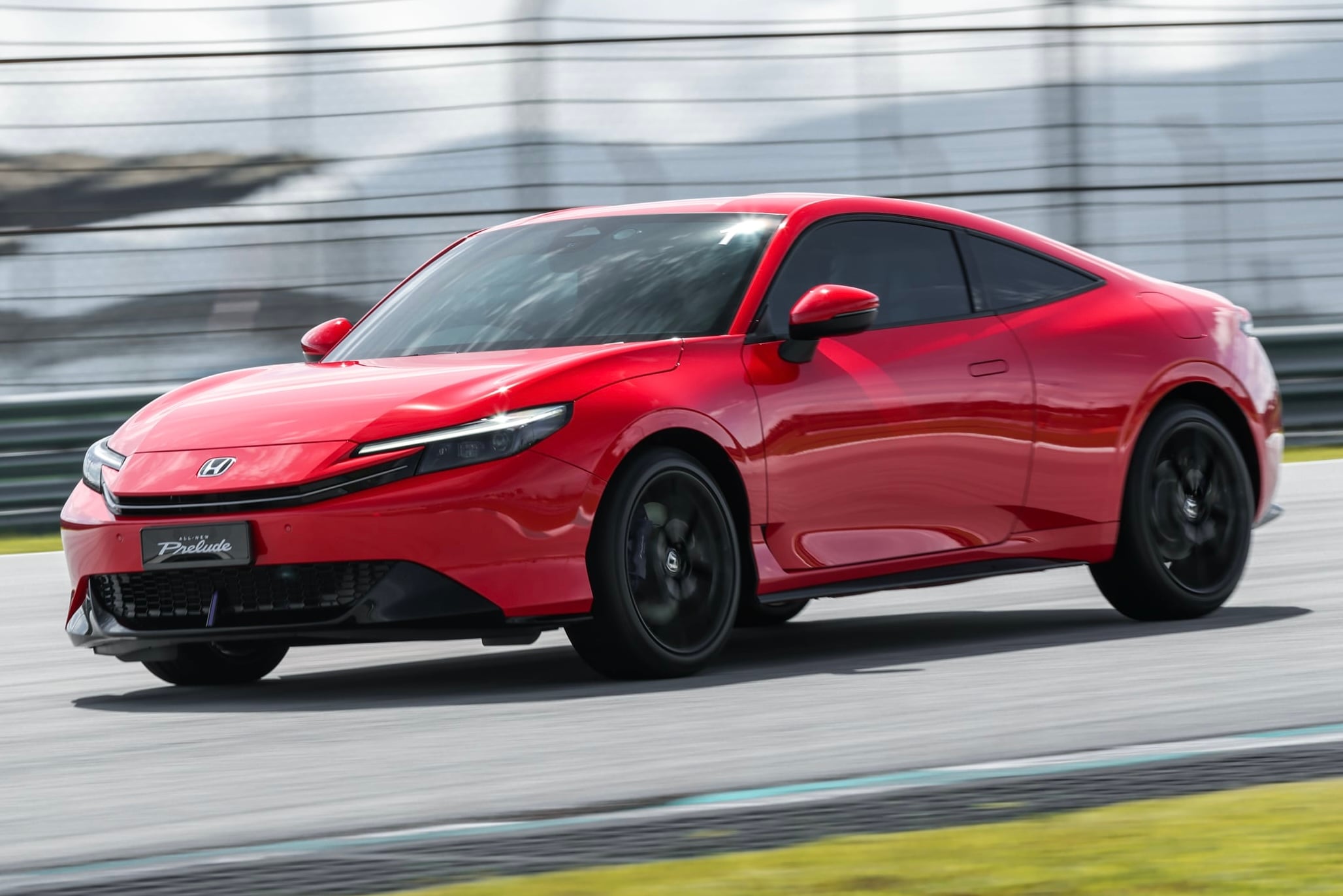
  • Honda Prelude gains 2027 Limited Edition in Japan – red exterior and accents, same hybrid system; RM162k
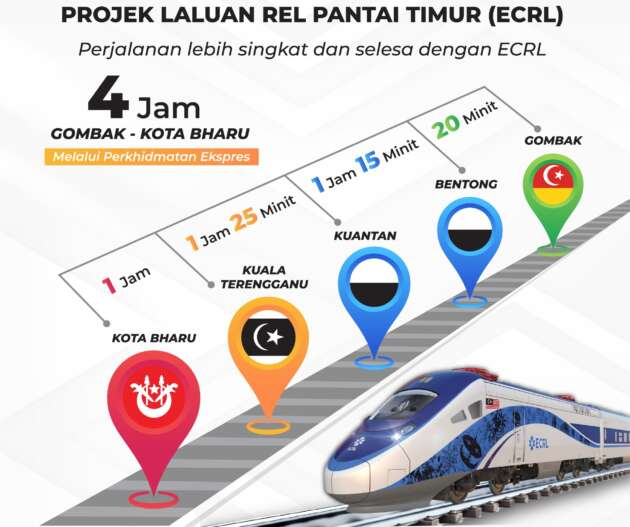
    Honda Prelude gains 2027 Limited Edition in Japan – red exterior and accents, same hybrid system; RM162k

    Honda has announced a special edition of the Prelude called the ‘2027 Limited Edition’, which will go on sale in Japan in August this year, less than a year after the revived model went on sale in its home market.

    Priced at 6,306,300 yen (about RM162k) inclusive of Japan’s 10% consumption tax, the Prelude 2027 Limited Edition is around 2% more expensive than a regular Prelude that sells for 6,179,800 yen (RM159k). Fun fact: the Prelude and Civic Type R (sold with the Racing Black Package) is now priced the same in Japan.

    For the premium, buyers will get the privilege of owning a Prelude painted in an exclusive Premium Crystal Garnet Metallic finish. This deep red hue gets matching accents on the front upper grille moulding as well as the bumpers, the latter originally being blue.

    Other changes include a machined black clear finish for the 19-inch wheels, which are of the same design as the standard Prelude, while the blue brake calipers are now finished in red. As for the interior, it follows the red theme with Bordeaux-coloured accents on the centre console and door armrest pads. You’ll also spot red stitching and two-tone leather seats with the ones at the front , featuring ‘Prelude’ embroidery on the headrest.

    Aside from the aesthetic changes, the rest of the 2027 Limited Edition is identical to a regular Prelude. This includes the hybrid powertrain, which continues to feature a 2.0 litre naturally-aspirated inline-four petrol engine running on the Atkinson cycle to make 141 PS (139 hp or 104 kW) and 182 Nm of torque.

    The engine primarily serves to charge a battery, which then powers a front electric motor rated at 184 PS (181 hp or 135 kW) and 315 Nm. When needed, the engine can directly drive the front wheels via an E-CVT, and this setup, called Intelligent Multi-Mode Drive (i-MMD), is what you’ll find in the Civic e:HEV.

     
  • Transport ministry to redefine micromobility rules; to bring provisions for safety requirements, enforcement

    Transport ministry to redefine micromobility rules; to bring provisions for safety requirements, enforcement

    The planned amendments to the Road Transport Act 1987 (Act 333) by the ministry of transport (MoT) include revisions to provisions specific to micromobility vehicles, transport minister Anthony Loke has said in a briefing.

    The amendments are to introduce a specific definition of micromobility vehicles, which cover e-scooters, e-bikes, hoverboards and the like, as well as to set the conditions of their usage on public roads such as permitted paths, speed limits and their users’ minimum age.

    Provisions to be introduced with regard to micromobility vehicles also include safety requirements, such as equipment including helmets, lights, reflectors and bells. Provisions will also be made for the responsibility of micromobility vehicle users, including restrictions on dangerous operation, taking passengers or using mobile phones while operating micromobility vehicles.

    Amendments will also be made to empower enforcement officers to take action and apply penalties against offences committed in the operation of micromobility vehicles, with Sections 112 and 127 of the Road Transport Act 1987 (Act 333) to be amended. These amendments and others by the ministry of transport will be presented in Parliament next week.

     
  • BYD Dolphin G full details – up to 212 PS, 105 km WLTP EV range, 1,040 km total range for PHEV hatch

    BYD Dolphin G full details – up to 212 PS, 105 km WLTP EV range, 1,040 km total range for PHEV hatch

    The BYD Dolphin G was revealed last month, and we now get more details about the plug-in hybrid B-segment hatchback. Designed specifically for the European market, it will be available to order on the continent within the next couple of months, with deliveries kicking off in the fourth quarter of the year.

    Among the details is what’s powering the car – BYD’s latest fifth-generation Dual Mode-Intelligent (DM-i) powertrain, making its debut in Europe. This consists of a 95 PS/120 Nm 1.5 litre four-cylinder engine and a 163 PS/210 Nm electric drive motor, along with a generator motor, a dedicated hybrid transmission (DHT) and a clutch to allow the engine to occasionally drive the wheels.

    Total system output depends on the Blade LFP battery provided – the base model with a 7.42 kWh battery produces 176 PS and 210 Nm of torque, while other variants with a 18.3 kWh pack get boosted to 212 PS. Despite this, all models get from zero to 100 km/h in 8.3 seconds on their way to a top speed of 180 km/h.

    BYD Dolphin G full details – up to 212 PS, 105 km WLTP EV range, 1,040 km total range for PHEV hatch

    Those batteries, by the way, deliver a claimed electric range of 40 km with the 7.42 kWh unit and 105 km with the 18.3 kWh one, and with a 42 litre fuel tank, total range figures are quoted at 1,019 km and 1,040 km respectively. Fuel consumption is rated at 23.2 km per litre (4.3 litres per 100 km) with the 7.42 kWh battery and 22.2 km per litre (4.5 litres per 100 km) with the 18.3 kWh pack.

    Charging speeds also vary depending on the battery chosen – the 7.42 kWh battery only accepts up to 3.3 kW of AC charging, filling it from 15 to 100% in 2.8 hours. The 18.3 kWh pack doubles that to 6.6 kW, but even so, its larger capacity means it takes slightly longer to be charged back up, at 2.9 hours. The larger battery is also the only one to support DC fast charging at up to 39 kW, for a 10 to 80% top up in 26 minutes.

    Slotting in between the electric version and the diminutive Dolphin Surf (i.e. the Atto 1), the Dolphin G measures 4,160 mm long, 1,825 mm wide and 1,575 mm tall, making it 130 mm shorter but 55 mm wider and five millimetres taller than the regular Dolphin. Its 2,610 mm wheelbase, meanwhile, is 90 mm shorter.

    BYD Dolphin G full details – up to 212 PS, 105 km WLTP EV range, 1,040 km total range for PHEV hatch

    On the outside, the Dolphin lineage is fairly obvious, with the G retaining the streamlined one-box body style and blacked-out C-pillars for a “floating roof” look. However, the design is sleeker and sportier with slim triangular headlights joined together by a simple black strip, plus a downturned centre air intake with an active grille shutter and slim corner inlets.

    Along the side, the myriad of lines on the electric Dolphin have been smoothened out, with a simple shoulder crease, flush pull-up door handles and triangular surfacing along the flanks being the only adornments. The window line rises past the rear doors but then drops to meet the full-width taillights to create a “kick” motif. The alloy wheels measure either 16 or 18 inches in diameter depending on the trim level.

    Inside, the G is rather sober compared to the original Dolphin, replacing the flowing lines with a simple horizontal dashboard design, replete with a flat gloss black panel that also houses the 8.8-inch instrument display (much larger than the five-inch unit in the electric model). The round air vents have also been replaced by simpler rectangular vents with vertical fins.

    There are still some playful touches, such as the dolphin fin-inspired door handles and an ornate steering wheel with wing-shaped spokes. Depending on the trim level, the infotainment touchscreen measures 10.1 or 12.8 inches across, and you get wireless Apple CarPlay and Android Auto, Google services built in and even a head-up display on the range-topper.

    Meanwhile, the gear selector, previously a dial below the centre “shelf”, has been moved to the steering column. This makes space for a bridge-style centre console, equipped with a 15-watt Qi wireless charger and no less than three cupholders. There’s also a powered driver’s seat, a panoramic glass roof with a retractable sunshade, vehicle-to-load (V2L) at 3.3 kW and a 360-degree camera, as well as a large 425 litre boot.

    It remains to be seen if the Dolphin G will be offered in Malaysia to complement the electric model, but the relative expense of the PHEV powertrain would likely push its price beyond natural rivals like the Honda City Hatchback and Toyota Yaris. It would also depend heavily on BYD being able to assemble its cars locally, either by restarting its stalled plant in Tanjong Malim or collaborating with a contract manufacturer like Sime Motors. Would you like to see this car here? Let us know in the comments.

     
  • 2026 Volkswagen Golf R Mk8.5 launched in Malaysia – CKD; 333 PS 2.0T, larger infotainment; from RM357k

    2026 Volkswagen Golf R Mk8.5 launched in Malaysia – CKD; 333 PS 2.0T, larger infotainment; from RM357k

    Following its global debut in June 2024, the Volkswagen Golf R Mk8.5 has now been launched in Malaysia. Like the Mk8 model it replaces, the newer Mk8.5 continues to be a CKD offering, with Malaysia being the only country outside of Germany to locally assemble the Golf R – the hot hatch is assembled in Pekan.

    Volkswagen Passenger Cars Malaysia (VPCM) is asking RM338,812 for the latest Golf R, with the on-the-road figure excluding insurance and the Volkswagen Assurance Package (VAP). The latter is available as a RM18,200 option that bumps the price to RM357,012 and includes a five-year warranty as well as a five-year maintenance package and five years of roadside assistance. Without it, it’s just a two-year warranty and roadside assistance.

    For the money, you’re getting the most powerful production Golf currently in the market. The Golf R still comes with an EA888 2.0 litre turbocharged inline-four petrol engine as before, albeit fettled with to now deliver 333 PS (329 hp or 245 kW) and 420 Nm of torque. By comparison, the Mk8 model serves up 320 PS (315 hp or 235 kW) and 400 Nm.

    Drive continues to be transmitted to all four wheels via a seven-speed dual-clutch automatic gearbox and 4Motion all-wheel-drive with torque vectoring, which is good for a 0-100 km/h time of 4.6 seconds (4.8 seconds for the Mk8) and an electronically-limited top speed of 250 km/h. The Golf R comes standard with progressive steering, Dynamic Chassis Control (DCC) with selectable profiles, sports suspension and an XDS electronic differential lock.

    You’ll be able to identify the new Golf R by its revised front end that features sharper lines for a more expressive look. This applies to the front bumper with angled structures that serve to channel air to the side inlets, while the upward-facing “fangs” have been brought closer to the middle of the more exposed central intake.

    The headlamps have also been reshaped to be sleeker and are IQ.Light LED matrix units with High Beam Plus. These are joined by an illuminated VW logo with accompanying light strips, while the rear gets taillights with a new light signature as well as a roof spoiler.

    Carried over from the Mk8 are the 19-inch ‘Estoril’ alloy wheels with 235/35R19 tyres and an Akrapovic titanium exhaust with quad pipes. You can order the Golf R in one of four colours, with Dolphin Grey being a new option joining Lapiz Blue, Grenadilla Black and Pure White.

    2026 Volkswagen Golf R Mk8.5 pricing and specs; click to enlarge

    Inside, the big change is the new 12.9-inch Discover Media infotainment system that replaces the smaller 10-inch Discover Pro system. This is hooked up to a nine-speaker (including subwoofer) Harman Kardon sound system, and you still get wireless Android Auto and Apple CarPlay. Other technologies include a 10-inch Digital Cockpit Pro instrument cluster, a wireless charging, three-zone climate control, keyless entry and start and a head-up display.

    In terms of interior appointments, the Golf R gets a black headliner, carbon grey interior trim, brushed stainless steel pedals, Nappa leather seat upholstery, a powered driver’s seat, 30-colour ambient lighting as well as heated and ventilated front seats.

    Safety and driver assistance equipment remain familiar, with standard items being seven airbags (front, front side, curtain and one centre) and IQ.Drive, which brings Travel Assist with adaptive cruise control (ACC), side assist with rear cross traffic alert, front assist (AEB), emergency assist, and lane assist. Park distance control (front and rear), a rear-view camera and hill start assist are also on.

    GALLERY: 2026 Volkswagen Golf R Mk8.5 Malaysia launch official photos

    GALLERY: 2026 Volkswagen Golf R Mk8.5 Malaysian brochure

     
  • Malaysia has never had more car brands: 98 fought for buyers in 2025, but 9 still took 90% of sales

    Malaysia has never had more car brands: 98 fought for buyers in 2025, but 9 still took 90% of sales

    Walk through any shopping mall atrium in Malaysia today and the sheer number of car brands competing for your attention can be dizzying. The data backs up the feeling. In 2025, a record 98 different marques registered at least one vehicle here, up from 70 in 2010. There have never been more brands fighting for the Malaysian car buyer. And yet, for all that choice, the names actually winning have barely changed at all.

    For most of the 2010s the brand count hovered between 76 and 88. The jump to 98 has come almost entirely in the last two years, and almost all of the new arrivals are Chinese. Omoda | Jaecoo, Jetour, Zeekr, Xpeng, iCaur, Denza, Leapmotor and a string of others have all landed since 2022, turning a fairly settled field into the most crowded it has ever been.

    Malaysia has never had more car brands: 98 fought for buyers in 2025, but 9 still took 90% of sales

    Here is the paradox, though. While the number of brands has swelled, the concentration of sales has not budged. The top five brands took 84.3% of the market in 2025, almost exactly the 86.4% they held back in 2010. Through every twist of the last 15 years, that figure has stayed pinned between roughly 82% and 87%. More players have simply meant more brands sharing the same small slice of leftovers.

    Just how lopsided is it? Of the 98 brands that sold cars in 2025, only nine were needed to account for 90% of all registrations. The other 89 brands fought over the remaining 9.8% between them, and 51 of those sold fewer than 100 cars for the entire year. For all the new badges in the showrooms, the vast majority remain rounding errors.

    Malaysia has never had more car brands: 98 fought for buyers in 2025, but 9 still took 90% of sales

    The one genuine change at the top is telling. The fifth-biggest brand in 2025 was not a long-established Japanese or European name, but Omoda | Jaecoo, a Chinese newcomer that did not exist here three years ago. It is the clearest sign that while the Chinese influx has not yet broken the dominance of Perodua, Proton, Toyota and Honda, it has started to reshape the chasing pack. The market has never been more crowded. Whether it stays this concentrated is the question for the next few years.

    Do you think any of the newcomers can break into the top tier? Let us know in the comments.

     
  • Used Honda Civic FC buyer’s guide (2016-2021) – the ‘Ketam’, 1.5 turbo vs 1.8, specs, problems and prices

    Used Honda Civic FC buyer’s guide (2016-2021) – the ‘Ketam’, 1.5 turbo vs 1.8, specs, problems and prices

    The tenth-generation Honda Civic – chassis code FC – is one of the most sought-after used C-segment sedans in Malaysia, and for good reason.

    It was the car that brought turbo power and genuinely head-turning styling to the mainstream Civic, and a decade on it remains hugely popular on the used market. Malaysians know it best by its nickname: the “Civic Ketam.”

    This is a used-buyer’s guide to the FC Civic (2016-2021): what the variants are, the all-important 1.5 turbo vs 1.8 NA decision, a full spec table, how the 2020 facelift differs from the earlier car, what to budget, and – crucially – the known issues to check before you hand over any money.

    Why is it called the “Civic Ketam”?

    Used Honda Civic FC buyer’s guide (2016-2021) – the ‘Ketam’, 1.5 turbo vs 1.8, specs, problems and prices

    “Ketam” is Malay for crab, and the nickname is local slang for this tenth-gen FC Civic. It’s a nod to the car’s sharp, claw-like rear light signatures.

    The name stuck so firmly that “Civic Ketam” (and “Honda Ketam”) is now everyday shorthand for this generation, the range-topping Type R sibling included. If you’re searching used listings, the term will turn up exactly these 2016-2021 cars.

    FC Civic at a glance

    The FC was sold in Malaysia from June 2016, locally assembled (CKD), and given a mid-life facelift in February 2020 before the all-new 11th-gen Civic FE replaced it in 2022. Across its life it came as a five-seat sedan in three core trims – the naturally-aspirated 1.8 S, and two turbocharged versions, the 1.5 TC and the range-topping 1.5 TC-P (badged 1.5 TC Premium on the earlier car).

    Every FC drives the front wheels through a CVT automatic; there was no manual. Boot space is a generous 519 litres and the fuel tank holds 47 litres. All variants came with six airbags and Honda’s standard five-year, unlimited-mileage warranty when new.

    The spec sheet

    Here’s how the three trims compare. Power figures shown are for the 2020 facelift; the pre-facelift car made a touch less (139 PS for the 1.8, 171 PS for the turbo).

    paultan.org
    Honda Civic FC - variant spec comparison
    Specification 1.8 S 1.5 TC 1.5 TC-P
    Engine 1.8L SOHC i-VTEC NA 1.5L DOHC VTEC Turbo (L15B7) 1.5L DOHC VTEC Turbo (L15B7)
    Power 141 PS at 6,500 rpm 173 PS at 5,500 rpm 173 PS at 5,500 rpm
    Torque 174 Nm at 4,300 rpm 220 Nm at 1,700 rpm 220 Nm at 1,700 rpm
    Transmission CVT, front-wheel drive CVT, front-wheel drive CVT, front-wheel drive
    0-100 km/h 10.4 seconds 8.2 seconds 8.2 seconds
    Fuel economy (claimed) 6.3 L/100km 5.8 L/100km 5.8 L/100km
    Wheels 16-inch 17-inch 18-inch (Michelin Pilot Sport 4)
    Honda Sensing Not available Not available Yes (2020 facelift only)
    Boot space 519 litres 519 litres 519 litres
    Fuel tank 47 litres 47 litres 47 litres
    Kerb weight 1,251 kg 1,314 kg 1,316 kg
    Launch price (2020, OTR) RM113,600 RM129,600 RM139,600
    Powertrain and dimension figures from carbase.my; power shown is for the 2020 facelift (pre-facelift: 139 PS NA / 171 PS turbo). Fuel economy is the manufacturer claim. Launch prices are 2020 facelift RRP, OTR without insurance.

    1.5 turbo vs 1.8 NA – which should you buy used?

    This is the central question for any FC buyer, and the answer depends on what you want.

    The 1.5 litre VTEC Turbo (Honda’s L15B7) is the star of the range. With 173 PS and a fat 220 Nm of torque available from just 1,700 rpm, it transforms the Civic – 0-100 km/h drops to 8.2 seconds, overtaking is effortless, and the claimed fuel economy is actually better than the 1.8 at 5.8 L/100km thanks to the relaxed, low-rpm torque. This is the engine most buyers chase, and the reason the FC built its sporty reputation.

    The naturally-aspirated 1.8 litre i-VTEC is the simpler, more affordable entry point. At 141 PS and 174 Nm it’s noticeably more relaxed – 10.4 seconds to 100 km/h – and it needs to be revved to feel willing. But it’s the mechanically simpler choice, with none of the turbo era’s specific concerns (more on those below), which is exactly why some used buyers prefer it for low-stress, long-term ownership.

    In short: buy the 1.5 turbo if you want the performance and don’t mind staying on top of maintenance; buy the 1.8 if you prioritise simplicity, a lower purchase price and peace of mind.

    Pre-facelift vs facelift – what changed in 2020

    Left: Pre-facelift, Right: Facelift

    The FC’s February 2020 facelift was a light touch visually but added some meaningful kit. Prices rose with the facelift too – by between roughly RM5,400 and RM11,000 depending on variant. Knowing the difference matters when you’re comparing used listings, because a facelift car commands a premium.

    Here is a list of what changed:

    – Styling: a redesigned front bumper with a single full-width black trim piece, a new rear bumper garnish, and – on the TC-P only – a piano-black “wing” across the grille, a boot spoiler and new 18-inch alloys (wrapped in Michelin Pilot Sport 4 tyres).
    – Honda Sensing: the headline addition, but fitted to the range-topping 1.5 TC-P only. The suite includes adaptive cruise control with low-speed follow, forward collision warning, collision mitigation braking, lane keep assist, road departure mitigation and auto high beam, plus Honda’s LaneWatch side camera.
    – Other kit: the 1.5 TC gained LED headlamps and fog lamps (previously halogen) plus LaneWatch; all variants picked up front parking sensors, automatic rain-sensing wipers, 60:40 split-folding rear seats (the earlier car had a fixed bench), and a revised seven-inch head unit with proper physical knobs and buttons.
    – A tiny power bump: 139 to 141 PS for the 1.8, and 171 to 173 PS for the turbo.

    If you want the safety tech, note that Honda Sensing only ever came on the facelift 1.5 TC-P. A pre-facelift car, or a facelift 1.8 S / 1.5 TC, will not have it.

    What to budget on the used market

    As a reference, here’s what the FC cost new (2020 facelift, on-the-road without insurance): 1.8 S at RM113,600, 1.5 TC at RM129,600 and 1.5 TC-P at RM139,600. The pre-facelift cars launched a little lower, from around RM108,000 for the 1.8 to about RM132,000 for the turbo Premium.

    To see what FCs actually change hands for today, we looked at Honda Civic listings from the 2016-2021 period on Carro’s Malaysian used-car inventory – a sample of 244 cars. Two clear patterns emerge: the turbo commands a premium over the naturally-aspirated 1.8, and later cars hold their value noticeably better.

    By engine, typical asking prices (the middle half of listings) work out to:

    – 1.8 S (naturally-aspirated): roughly RM60,000 to RM84,000, with a median around RM72,000. The full spread runs from about RM38,000 for an early, high-mileage car to RM93,000 for the cleanest examples.
    – 1.5 TC / TC-P (turbo): roughly RM70,000 to RM96,000, with a median around RM84,000. The full spread runs from about RM44,000 to RM116,000.

    Here’s how median listing prices break down by year of manufacture:

    paultan.org
    Honda Civic FC - median used listing price by year
    Year of manufacture 1.8 S (NA) 1.5 TC / TC-P (Turbo)
    2016 ~RM58,000 ~RM66,000
    2017 ~RM67,000 ~RM70,000
    2018 ~RM69,000 ~RM67,000
    2019 ~RM79,000 ~RM82,000
    2020 ~RM79,000 ~RM93,000
    2021 ~RM79,000 ~RM94,000
    Median listing prices from Carro Malaysian used-car inventory (244 Civic FC listings, current plus recently sold; sampled June 2026). A market snapshot only - mileage, condition, ownership count and service history move individual cars significantly within each year. Always price a specific car against current live listings.

    The turbo premium is the general rule, but it isn’t absolute – a high-mileage turbo can dip into 1.8 money, which is why the 2018 medians sit so close. As always, condition and history matter as much as the badge on the bootlid.

    Known issues – what to check before buying

    Used Honda Civic FC buyer’s guide (2016-2021) – the ‘Ketam’, 1.5 turbo vs 1.8, specs, problems and prices

    The FC is a well-built, generally reliable car. The normally aspirated model will be cheaper to maintain, since it is simpler. Minor service will cost you between RM300-RM400. Expect between RM700-RM900 and above for major service.

    Potential issues include the CVT gearbox and the steering rack. There has also been a fuel pump recall for the Civic FC built between 2017-2018 so if you’re buying cars from that particular model year, do check if the recall has been performed.

    Look for signs of good CVT health. Look for smooth, judder-free pull-away and a documented CVT fluid service. And with a car like the Civic, “standard itu indah”, try to look for an unmodified car.

    – General used-car checks: verify service history, look for accident repairs and panel-gap inconsistencies, check the tyres, and take a test drive that includes hard acceleration to confirm the turbo pulls cleanly.

    Fuel Consumption

    Used Honda Civic FC buyer’s guide (2016-2021) – the ‘Ketam’, 1.5 turbo vs 1.8, specs, problems and prices

    The Honda Civic FC typically can go between 500-600km in the city, or 650-850km on the highway, with mileage averaging between 10-13 km per litre in the city depending on how heavy your foot is, or 14-18 km per litre on the highway.

    So, which FC Civic should you buy?

    For most buyers the sweet spot is a 2020-2021 facelift 1.5 TC-P: it pairs the strong turbo engine with Honda Sensing, the nicest wheels and the most complete kit, and as the newest FCs they’ll have the most life left. If your budget is tighter, an earlier 1.5 TC gives you the same brilliant turbo engine for less, just without the driver-assist tech. And if you simply want a dependable, fuss-free Civic at the lowest entry price, the naturally-aspirated 1.8 S is the pragmatic pick.

    Whichever you choose, buy on condition and service history first – a well-kept FC is one of the most satisfying used C-segment buys in Malaysia, which is exactly why the “Ketam” remains so in demand.
    GALLERY: 2016 Honda Civic 1.5 Turbo

    GALLERY: 2017 Honda Civic 1.8S

    GALLERY: 2020 Honda Civic 1.5 TC-P facelift


Sell your car to Carro, get paid in 24 hours


Latest Fuel Prices

PETROL
BUDI 95 RM1.99
RON 95 RM3.72 (0.00)
RON 97 RM4.35 (0.00)
RON 100 RM6.45
VPR RM7.68
DIESEL
EURO 5 B10 RM4.37 (-0.30)
EURO 5 B7 RM4.57 (-0.30)
Last Updated Jun 17, 2026

Latest Videos


Tools